

Showing posts with label George R.R. Martin. Show all posts
Showing posts with label George R.R. Martin. Show all posts
Monday, 30 May 2016
The World of Ice & Fire – A must for diehard Game of Thrones fans (of the books)
It took me over a year to get around to it, but last week I finally went out and bought myself a hardcover copy of George RR Martin's 'untold history of Westeros', The World of Ice and Fire.


Monday, 27 April 2015
Game of Thrones VS A Song of Ice and Fire.
I've been battling my own denial about the HBO series Game of Thrones catching up to and overtaking A Song of Ice and Fire (the books). But, since the arrival of HBO's fifth season I've had to face my fears. It's now been confirmed by the makers themselves that the television series will meet the end well before the books.

What conclusions am I formulating about this first world dilemma? Obviously, David Benioff and DB Weiss are going to have to create more of the detail and fabric of the story than they have so far. I largely trust them to do it justice. I think they've done a super job in translating this epic to the screen. But I do remain somewhat cautious.
It's been my opinion since the first season, that the number one reason I enjoy the television series is because Benioff and Weiss have remained so faithful to the books. And, in my little corner of the world, this opinion is largely shared (by fellow book nerds, anyway). Is this the reason why the series has been so successful overall? One might argue that great swarms who've never picked up any of the books have jumped on to the 'Game of Thrones' fan wagon anyway. In fact, there seems to be a bit of a new divide in society - the 'have reads' and the 'have not reads' and thedivision disagreements between the two are growing. But, is it because of the close adherence to the original story, the fact that they have so accurately translated the settings, characters, magic, and intrigue from the books, is this the real secret of the television success? And what does this mean for the future of the HBO series?
Before we go forward, let us go back - yeah, just like Daenerys.
There's no denying there have been many differences between the books and the TV series from Season One to now. A quick google search will bring them up, or if you really want the nitty gritty, here's a good place to see the season by season discrepancies. For the most part, I've appreciated those differences as interesting additions or changes that work well on the screen, but never greatly digress from the story in the books.

Flipping through the beautiful and new companion, The World of Ice and Fire Official History made me more aware of some of the visual discrepancies between the books (as imagined by the author) and the television series. I was reminded, for example that the iron throne looked less like this:


Many places are different too. Dragonstone in GoTs:

Compared to the Official History:

There's no denying Benioff and Weiss have done an excellent job with everything so far. But the first few episodes of Season Five have seen more dramatic differences from the books come into play. Large chunks of storylines have been entirely left out with Tyrion and Arya - and also Mance - what about the child he has in the books? And there have been major changes and additions to the plot lines of other characters - Sansa, Brienne and Jamie Lannister are all doing things that are just not done in the books (well, yet anyway).
While I still enjoy the television version (hell, I love it!), I do find myself vocalising the typical criticism of book nerds everywhere, "that doesn't happen in the books" more often in this series than any other - much to the annoyance of my 'haven't read' partner. And that's when I realised that, for me, a lot of the joy in watching this series is to see the books play out. So perhaps I am enjoying it a little less than usual. And there are still two more books to 'cover' in the television series. What happens when they have really 'caught up'. Will the changes be even more dramatic? Well, I guess we won't know until the long awaited Winds of Winter is released. Needless to say, what about all the spoilers to come?
There's one part of the television series that continues to be portrayed exceptionally well, in my opinion. Those dragons:

And while I'm confident the TV series will continue to please me (let me reiterate, Benioff and Weiss have done a brilliant job) I'll keep watching just for those dragons if nothing else.

What conclusions am I formulating about this first world dilemma? Obviously, David Benioff and DB Weiss are going to have to create more of the detail and fabric of the story than they have so far. I largely trust them to do it justice. I think they've done a super job in translating this epic to the screen. But I do remain somewhat cautious.
It's been my opinion since the first season, that the number one reason I enjoy the television series is because Benioff and Weiss have remained so faithful to the books. And, in my little corner of the world, this opinion is largely shared (by fellow book nerds, anyway). Is this the reason why the series has been so successful overall? One might argue that great swarms who've never picked up any of the books have jumped on to the 'Game of Thrones' fan wagon anyway. In fact, there seems to be a bit of a new divide in society - the 'have reads' and the 'have not reads' and the
Before we go forward, let us go back - yeah, just like Daenerys.
There's no denying there have been many differences between the books and the TV series from Season One to now. A quick google search will bring them up, or if you really want the nitty gritty, here's a good place to see the season by season discrepancies. For the most part, I've appreciated those differences as interesting additions or changes that work well on the screen, but never greatly digress from the story in the books.

Flipping through the beautiful and new companion, The World of Ice and Fire Official History made me more aware of some of the visual discrepancies between the books (as imagined by the author) and the television series. I was reminded, for example that the iron throne looked less like this:

And more like this:
.jpg)
Compared to the Official History:

There's no denying Benioff and Weiss have done an excellent job with everything so far. But the first few episodes of Season Five have seen more dramatic differences from the books come into play. Large chunks of storylines have been entirely left out with Tyrion and Arya - and also Mance - what about the child he has in the books? And there have been major changes and additions to the plot lines of other characters - Sansa, Brienne and Jamie Lannister are all doing things that are just not done in the books (well, yet anyway).
While I still enjoy the television version (hell, I love it!), I do find myself vocalising the typical criticism of book nerds everywhere, "that doesn't happen in the books" more often in this series than any other - much to the annoyance of my 'haven't read' partner. And that's when I realised that, for me, a lot of the joy in watching this series is to see the books play out. So perhaps I am enjoying it a little less than usual. And there are still two more books to 'cover' in the television series. What happens when they have really 'caught up'. Will the changes be even more dramatic? Well, I guess we won't know until the long awaited Winds of Winter is released. Needless to say, what about all the spoilers to come?
There's one part of the television series that continues to be portrayed exceptionally well, in my opinion. Those dragons:

And while I'm confident the TV series will continue to please me (let me reiterate, Benioff and Weiss have done a brilliant job) I'll keep watching just for those dragons if nothing else.
Sunday, 10 February 2013
Words from George R.R. Martin
Like the rest of the world, I'm a George R.R. Martin fan. I've always been a fan of fantasy, but Martin's brand is different. He's taken the genre to another level – one that's more 'real'. His characters experience problems of leaders and peasants from history. The magic remains mysteriously, and sometimes frustratingly, in the background. But it is all the more intriguing when it happens.
Like every other fan I am eagerly awaiting the release of the next novel of the series - The Winds of Winter.

In the meantime, what to do? Well, I recently spent the afternoon listening to Martin in a couple of interviews and a podcast. Interesting stuff for fans and aspiring fantasy writers alike.
A Song of Ice and Fire
The whole thing came to him in the summer of '81 when he struck upon the idea of a wolf that gave birth to pups during a summer snow. The summer snow was very important. From this he wrote a chapter and once that was done he knew what would happen in the next chapter. He spent the rest of that summer writing what would become 'Game of Thrones'. I like the way he stopped writing to draw a map and fully imagine this world of Westeros.
I'm happy to report his favourite character in this series is Tyrion, with Arya coming a close second (same as yours truly). You may not be surprised to learn that Joffrey is loosely based on five to six people he went to school with (I think Joffrey reminds all of us of a few people we'd rather forget).
Martin often receives letters from people who complain about the detail of his sex scenes. Interestingly, he receives no complaints about the detail of violence in scenes. He states this seems to be typical of America today.
But Martin takes the opportunity to challenge, politely, the sexlessness of Tolkien's work. And it's an interesting point. Amid all the imaginative landscapes and creatures – humans, elves, dwarves, orcs, hobbits, trolls and more, imagined by Tolkein, they're all ... sexless. Martin hasn't shied from sex in his work, and this makes his characters and stories more realistic, despite the 'fantasy' label.
On Writing
Martin endorses four rules for writers, as espoused by Robert A. Heinlein:
Some words for thought, no?
http://www.youtube.com/watch?v=QTTW8M_etko
http://www.youtube.com/watch?v=MdSPFJcxCNM
https://itunes.apple.com/au/podcast/george-r.-r.-martin-podcast/id200114114
Like every other fan I am eagerly awaiting the release of the next novel of the series - The Winds of Winter.
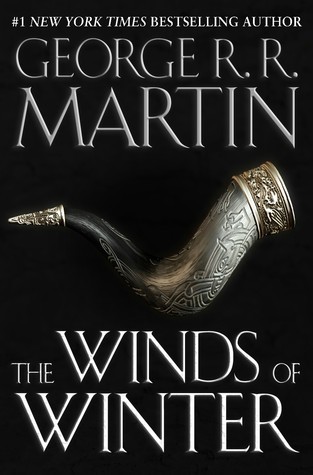
In the meantime, what to do? Well, I recently spent the afternoon listening to Martin in a couple of interviews and a podcast. Interesting stuff for fans and aspiring fantasy writers alike.
A Song of Ice and Fire
The whole thing came to him in the summer of '81 when he struck upon the idea of a wolf that gave birth to pups during a summer snow. The summer snow was very important. From this he wrote a chapter and once that was done he knew what would happen in the next chapter. He spent the rest of that summer writing what would become 'Game of Thrones'. I like the way he stopped writing to draw a map and fully imagine this world of Westeros.
I'm happy to report his favourite character in this series is Tyrion, with Arya coming a close second (same as yours truly). You may not be surprised to learn that Joffrey is loosely based on five to six people he went to school with (I think Joffrey reminds all of us of a few people we'd rather forget).
Martin often receives letters from people who complain about the detail of his sex scenes. Interestingly, he receives no complaints about the detail of violence in scenes. He states this seems to be typical of America today.
But Martin takes the opportunity to challenge, politely, the sexlessness of Tolkien's work. And it's an interesting point. Amid all the imaginative landscapes and creatures – humans, elves, dwarves, orcs, hobbits, trolls and more, imagined by Tolkein, they're all ... sexless. Martin hasn't shied from sex in his work, and this makes his characters and stories more realistic, despite the 'fantasy' label.
On Writing
Martin endorses four rules for writers, as espoused by Robert A. Heinlein:
- You must write.
- Finish what you write.
- You must market what you write.
- Refrain from rewriting - except on editorial feedback (endless fiddling with your story is not going to get you anywhere).
Martin adds two of his own rules to this list:
- Beginners should start with short stories – there is quite a demand for this in well renowned science fiction and fantasy magazines.
- Keep your day job, writing is a hard gig.
Other tidbits he said along the way:
- Martin's general philosophy for fantasy is to base it in reality, then get imaginative.
- Even good fantasy falls into the mistake of thinking the good man will become the good king – Tolkien does this with Aragorn. But societies are more complicated.
- The character is the heart of fiction. Make characters real.
- If everyone hates the villain and loves the hero – that's when we are dealing with cardboard. People are more complex.
Some words for thought, no?
http://www.youtube.com/watch?v=QTTW8M_etko
http://www.youtube.com/watch?v=MdSPFJcxCNM
https://itunes.apple.com/au/podcast/george-r.-r.-martin-podcast/id200114114
Saturday, 28 January 2012
How goes the resolution?
I did the typical 'fresh start' thing after New Year's and I wrote a post on this blog stating how I will be more disciplined in terms of my writing. So, how am I going with it?
Well I took a leaf out of Ernest Hemingway's book and started my own private journal on my writing. In it I set out a long term plan for my writing along with some very clear goals. Things like join five forums, follow five blogs, have three followers by Easter. I haven't quite achieved all of these yet but I now have three followers - thanks :)
But the most important goal I set was to write at least 100 words everyday. I'm not the first author to have this type of goal - Stephen King writes 10 pages every day! My little 100 words doesn't look like much but I chose it for a reason. Like many aspiring writers I find my 'day job' incredibly consuming. Some days I know I will be struggling to get even 100 words done, but if I do it I'll be writing and achieving something. So far I have written more than 100 words most days, there were a couple of days I was unable to do any writing at all, but I think we have to accept that sometimes this will happen. I have completed the first chapter (5000 words) for one of my novels, so I feel like I have accomplished something. Last night I gave myself a pat on the back and a glass of champagne. Hope I don't go too crazy when I complete the thing!
One thing I have found quite inspiring to do, is to read what my favourite authors have to say about the process of writing. I'd recommend this. If you have a few minutes to spare, just google them and see if they have a web site or blog. Lots of them do, and lots of them have a section on writing.
Here's some pearls of wisdom from some of my favourite authors:
See what I mean? Aren't they useful tidbits? The trick of course is to keep yourself focused on your writing and not to get sidetracked reading the wonderful insights of others. I have sat down to write and two hours later found myself still reading the musings on various blogs and forums. But this is a good lesson too. I'm pretty good at tearing myself away now to write.
So off you go, stop reading this drivel and get into your bestseller ;)
I'll leave you with one more quote on writing, since I began with Hemingway why not finish with the Old Man himself?
Well I took a leaf out of Ernest Hemingway's book and started my own private journal on my writing. In it I set out a long term plan for my writing along with some very clear goals. Things like join five forums, follow five blogs, have three followers by Easter. I haven't quite achieved all of these yet but I now have three followers - thanks :)
But the most important goal I set was to write at least 100 words everyday. I'm not the first author to have this type of goal - Stephen King writes 10 pages every day! My little 100 words doesn't look like much but I chose it for a reason. Like many aspiring writers I find my 'day job' incredibly consuming. Some days I know I will be struggling to get even 100 words done, but if I do it I'll be writing and achieving something. So far I have written more than 100 words most days, there were a couple of days I was unable to do any writing at all, but I think we have to accept that sometimes this will happen. I have completed the first chapter (5000 words) for one of my novels, so I feel like I have accomplished something. Last night I gave myself a pat on the back and a glass of champagne. Hope I don't go too crazy when I complete the thing!
One thing I have found quite inspiring to do, is to read what my favourite authors have to say about the process of writing. I'd recommend this. If you have a few minutes to spare, just google them and see if they have a web site or blog. Lots of them do, and lots of them have a section on writing.
Here's some pearls of wisdom from some of my favourite authors:
Katherine Kerr - Here's the secret of any writer's success: reading. What really counts is reading a large spread of different kinds of books -- from fantasy to ancient literature to modern experimental novels to the great classics from all around the world.
Ken Follett - As an aspiring writer, you should certainly start by writing an outline... You solve a lot of problems with an outline. It is far easier to correct your mistakes if you write an outline than if you sat down and wrote, 'Chapter One' at the top of a piece of paper and started writing.
Jean M. Auel - I write for myself ... I don't write for my publisher. I don't write for critics. I don't write for my fans. I know some fans would wish I would write for them, but I don't. It's my book. It's my story. It's my characters.
George R.R. Martin - Write every day, even if it is only a page or two. The more you write, the better you'll get. But don't write in my universe, or Tolkien's, or the Marvel universe, or the Star Trek universe, or any other borrowed background. Every writer needs to learn to create his own characters, worlds, and settings. Using someone else's world is the lazy way out. If you don't exercise those "literary muscles," you'll never develop them.
Neil Gaiman - Use The Web. Use it for anything you can - writers groups, feedback, networking, finding out how things work, getting published. It exists: take advantage of it. Believe in yourself. Keep writing.
See what I mean? Aren't they useful tidbits? The trick of course is to keep yourself focused on your writing and not to get sidetracked reading the wonderful insights of others. I have sat down to write and two hours later found myself still reading the musings on various blogs and forums. But this is a good lesson too. I'm pretty good at tearing myself away now to write.
So off you go, stop reading this drivel and get into your bestseller ;)
I'll leave you with one more quote on writing, since I began with Hemingway why not finish with the Old Man himself?
There is no rule on how to write. Sometimes it comes easily and perfectly; sometimes it's like drilling rock and then blasting it out with charges.
Ernest Hemingway.
Subscribe to:
Posts (Atom)