Showing posts with label writing resources. Show all posts

Monday, 22 August 2016

Thursday, 3 December 2015

Self-Published Fiction and the Quest for Quality

Some might suggest it's the elephant in the room over at Amazon, or Smashwords. The self-publishing revolution has liberated thousands of authors from the chains of traditional publishing. But has it also let loose hordes of poor quality books that readers must wade through in order to find the gems? How can authors put quality control measures into their writing-publishing process to ensure that what they offer to the world of readers is truly their best work?

Saturday, 8 February 2014

Indie Book Marketing 101 - Build a list for crying out loud!

I've been fluffing around on this blog and twitter for a while now, mostly procrastinating, but every now and then making a serious attempt to 'market' my humble debut publication 'The Viscount's Son'. I am about to release my second publication and I thought maybe it's time I get my butt into gear with the whole marketing thing.  After all, the indie author - especially the newbie indie author - has to do everything themselves. There's no PR department in a big publishing house to do the hard yards for us. As much as most of us hating blowing our own trumpet, it's that trumpet that will get our books read.

Guard your email list like it's a magic scroll!

Sunday, 22 September 2013

Why write fantasy?

This question is rarely asked outright. Either the person I'm talking to is a die hard fantasy fan, in which case the question is a redundant one; or they're quite the opposite and prefer to nod their head and give me that raised eyebrow look, rather than ask the obvious question 'but why write fantasy'?

But, it's a question I like to ask myself. Why do I write fantasy?

I love the places in fantasy fiction.

Sunday, 10 February 2013

Words from George R.R. Martin

Like the rest of the world, I'm a George R.R. Martin fan.  I've always been a fan of fantasy, but Martin's brand is different.  He's taken the genre to another level – one that's more 'real'.  His characters experience problems of leaders and peasants from history.  The magic remains mysteriously, and sometimes frustratingly, in the background.  But it is all the more intriguing when it happens.

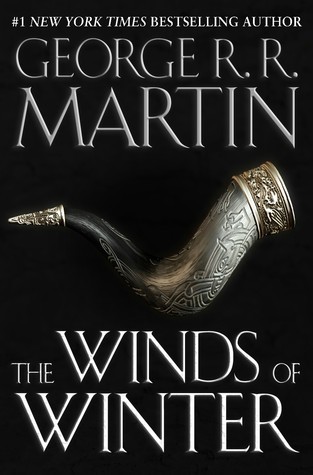
Like every other fan I am eagerly awaiting the release of the next novel of the series - The Winds of Winter.


In the meantime, what to do?  Well, I recently spent the afternoon listening to Martin in a couple of interviews and a podcast.  Interesting stuff for fans and aspiring fantasy writers alike.

A Song of Ice and Fire

The whole thing came to him in the summer of '81 when he struck upon the idea of a wolf that gave birth to pups during a summer snow.  The summer snow was very important.  From this he wrote a chapter and once that was done he knew what would happen in the next chapter.  He spent the rest of that summer writing what would become 'Game of Thrones'.  I like the way he stopped writing to draw a map and fully imagine this world of Westeros.

I'm happy to report his favourite character in this series is Tyrion, with Arya coming a close second (same as yours truly).  You may not be surprised to learn that Joffrey is loosely based on five to six people he went to school with (I think Joffrey reminds all of us of a few people we'd rather forget).

Martin often receives letters from people who complain about the detail of his sex scenes.  Interestingly, he receives no complaints about the detail of violence in scenes.  He states this seems to be typical of America today.

But Martin takes the opportunity to challenge, politely, the sexlessness of Tolkien's work.  And it's an interesting point.  Amid all the imaginative landscapes and creatures – humans, elves, dwarves, orcs, hobbits, trolls and more, imagined by Tolkein, they're all ... sexless.  Martin hasn't shied from sex in his work, and this makes his characters and stories more realistic, despite the 'fantasy' label.

On Writing

Martin endorses four rules for writers, as espoused by Robert A. Heinlein:

  1. You must write.
  2. Finish what you write.
  3. You must market what you write.
  4. Refrain from rewriting - except on editorial feedback (endless fiddling with your story is not going to get you anywhere).
Martin adds two of his own rules to this list:
  • Beginners should start with short stories – there is quite a demand for this in well renowned science fiction and fantasy magazines.
  • Keep your day job, writing is a hard gig.
Other tidbits he said along the way:
  • Martin's general philosophy for fantasy is to base it in reality, then get imaginative.
  • Even good fantasy falls into the mistake of thinking the good man will become the good king – Tolkien does this with Aragorn.  But societies are more complicated.
  • The character is the heart of fiction.  Make characters real.
  • If everyone hates the villain and loves the hero – that's when we are dealing with cardboard.  People are more complex.

Some words for thought, no?

http://www.youtube.com/watch?v=QTTW8M_etko
http://www.youtube.com/watch?v=MdSPFJcxCNM
https://itunes.apple.com/au/podcast/george-r.-r.-martin-podcast/id200114114

Saturday, 2 February 2013

A writing schedule that works.

In previous posts I hinted about a writing schedule that works for me.  So, I thought I'd share it.  It's nothing new or particularly innovative, and the key here is that it works for me.  You should find something that works for you.


When I first decided to become serious about writing, I resolved to write when time permitted.  I'm sure you can guess what happened.  Life took over.  The phone would ring, I'd answer it.  The dishes would need doing.  There would be a show on the tv that sucked me in.  My writing trickled away to something I did on the weekend.

This arbitrary approach was never going to work.  One piece of advice often repeated, is to write often.  It's important for our practise and our momentum that we write on a daily basis.  Stephen King states that if you don't write every day "you'll lose the urgency and immediacy of your story..." (On Writing).

I'm no different to most aspiring authors.  I have a full-time job and family commitments, so how was I supposed to find some quality time to write every day?

Well here's what I did.

I sat down one day and looked at all of my commitments for each day of the week.  I decided upon a goal to write for one hour a day, six days a week.  Then I went through every day and found that hour.  Some days I write as soon as I get out of bed at 6am.  I grab a cup of tea and write through to 7am.  Other days I write in the evenings, before bed.    The weekends prove a little more flexible, and often I write more than the one hour.

Sticking to this schedule has enabled me to complete my first novelette and novel (soon to be released), and I am half-way through a third work.  Some days I write a thousand words.  Other days I barely make 200, but I am writing.

I guess the 'trick' if there is one, is to look at each day and determine the best time to write.  The next thing is to stick to it - ignore the phone and make the dishes wait.


Saturday, 26 January 2013

Become a better writer ... while you clean?

Real life can peeve me.  Dishes need to be washed, carpets need vacuuming, the cat's fur-balls need cleaning up – there's always some chore that takes up time when I'd rather be reading, writing or dreaming.

Unfortunately, the fairies never show up to clean at my house.
But, podcasts make housework more interesting.
Image care of Design Crowd

Sunday, 22 July 2012

Here's a tip ... learn how to type

I've been working hard on completing the first draft of my first novel and I've done it!  Yep, 80 000 words of literary genius error-ridden plot is now saved and backed up on my mac.  So, after reading what other novelists do with their second draft, I decided to retype the whole thing so that I can deliberate upon every word, every comma.

As I sat down to do this I became aware of how slow I was as a typist.  It was taking me forever to type just one paragraph.  So I decided to learn how to touch type.

I installed a free app called 'Typist' (who'da thought) and it has been one of the best decisions I have made in my writing career so far (all six months of it).


If you're thinking that it's simply a form of procrastination cleverly disguised as writing, well you could be onto something.  But don't tell my higher consciousness that.

Seriously, my typing has improved and it is nice to look at the screen rather than the keyboard.


Saturday, 14 April 2012

'On Writing' by Stephen King

Ask any author the question, 'how can I improve my writing?' and you are likely to get the following response: 'Write and read ... a lot!'


Saturday, 17 March 2012

A Writing Schedule

You may have noticed that I haven't posted for a couple of weeks.  And you may remember I made a commitment to post regularly without fail!  I also made a commitment to write 100 words of my novel every day.  Without fail.  Looks like I've failed.

Saturday, 28 January 2012

How goes the resolution?

I did the typical 'fresh start' thing after New Year's and I wrote a post on this blog stating how I will be more disciplined in terms of my writing.  So, how am I going with it?

Well I took a leaf out of Ernest Hemingway's book and started my own private journal on my writing.  In it I set out a long term plan for my writing along with some very clear goals.  Things like join five forums, follow five blogs, have three followers by Easter.  I haven't quite achieved all of these yet but I now have three followers - thanks :)

But the most important goal I set was to write at least 100 words everyday.  I'm not the first author to have this type of goal - Stephen King writes 10 pages every day!  My little 100 words doesn't look like much but I chose it for a reason.  Like many aspiring writers I find my 'day job' incredibly consuming.  Some days I know I will be struggling to get even 100 words done, but if I do it I'll be writing and achieving something.  So far I have written more than 100 words most days, there were a couple of days I was unable to do any writing at all, but I think we have to accept that sometimes this will happen.  I have completed the first chapter (5000 words) for one of my novels, so I feel like I have accomplished something.  Last night I gave myself a pat on the back and a glass of champagne.  Hope I don't go too crazy when I complete the thing!

One thing I have found quite inspiring to do, is to read what my favourite authors have to say about the process of writing.  I'd recommend this.  If you have a few minutes to spare, just google them and see if they have a web site or blog.  Lots of them do, and lots of them have a section on writing.

Here's some pearls of wisdom from some of my favourite authors:

Katherine Kerr - Here's the secret of any writer's success: reading. What really counts is reading a large spread of different kinds of books -- from fantasy to ancient literature to modern experimental novels to the great classics from all around the world.

Ken FollettAs an aspiring writer, you should certainly start by writing an outline... You solve a lot of problems with an outline. It is far easier to correct your mistakes if you write an outline than if you sat down and wrote, 'Chapter One' at the top of a piece of paper and started writing. 

Jean M. AuelI write for myself ... I don't write for my publisher. I don't write for critics. I don't write for my fans. I know some fans would wish I would write for them, but I don't. It's my book. It's my story. It's my characters. 

George R.R. MartinWrite every day, even if it is only a page or two. The more you write, the better you'll get. But don't write in my universe, or Tolkien's, or the Marvel universe, or the Star Trek universe, or any other borrowed background. Every writer needs to learn to create his own characters, worlds, and settings. Using someone else's world is the lazy way out. If you don't exercise those "literary muscles," you'll never develop them. 

Neil GaimanUse The Web. Use it for anything you can - writers groups, feedback, networking, finding out how things work, getting published. It exists: take advantage of it. Believe in yourself. Keep writing. 

See what I mean?  Aren't they useful tidbits?  The trick of course is to keep yourself focused on your writing and not to get sidetracked reading the wonderful insights of others.  I have sat down to write and two hours later found myself still reading the musings on various blogs and forums.  But this is a good lesson too.  I'm pretty good at tearing myself away now to write.

So off you go, stop reading this drivel and get into your bestseller ;)

I'll leave you with one more quote on writing, since I began with Hemingway why not finish with the Old Man himself?

There is no rule on how to write. Sometimes it comes easily and perfectly; sometimes it's like drilling rock and then blasting it out with charges.
Ernest Hemingway. 

Thursday, 4 August 2011

A great read for writers!

The most important thing when writing is ... well, writing!  But, you should also start to consider other factors that will be pivotal in determining success and fame (well getting your name out there at least).

If you intend on epublishing (even if you're not)  I would like to suggest a very useful read from smashwords.  It's the 'Smashwords Book Marketing Guide'.


This FREE read will provide you with priceless insights about the competitive world of novels. It details the most effective 'tricks' for promoting your masterpiece on the web, from creating book trailers, to starting your own blog (who would have thought!!!). Enjoy.